At Valley Dental & Orthodontics, we are always striving to keep up with technology. In doing so, we are helping our patients and the environment.
All of you know that we have an intraoral digital x-ray sensor. Digital x-rays are beneficial to dentists because they reduce the time it takes for us to view an image. Traditional x-ray films take as long as 5 minutes to develop, whereas, digital images take as little as 5 seconds. However, the biggest advantage to digital radiography is the tremendous reduction of radiation exposed to our patients.
We are pleased to announce that we have recently purchased a new DIGITAL panoramic/cephalometric x-ray machine. This x-ray machine takes images extra-orally (the sensor/x-ray film is outside of the mouth). Film based panoramic/cephalometric x-rays take about 10 minutes to develop, and with our new digital system, we can now see these images in about 15 seconds. Once again, the biggest advantage is the significant reduction in the amount of radiation exposed to you, our patient.
Another impact for going digital is environmental. We no longer have developer and fixer on site, which are the chemicals that were needed to develop film x-rays. Because these two chemicals are considered hazardous materials, they can only be properly disposed of by companies that are specialized in handling these materials.

Tuesday, August 16, 2011

Friday, April 29, 2011
I Lost a Tooth. What Are My Options?
There are many options patients have to restore missing teeth. The most conservative is to replace the missing tooth/teeth with a denture. Although very conservative, they are bulky, insecure, and uncomfortable.
Dental bridges are more secure, as they are fixed and do not come out. They are a big improvement from the denture. However, to prepare for a bridge, the supporting teeth need to be ground down to a stub. In essence, a dental bridge makes a one tooth problem a multi-teeth problem. On average, a bridge last for 10 years. Each time it has to be remade, the natural tooth structure has to be ground down a little more
In the 1980’s, dental implants came into the United States. Since then, many changes have evolved making dental implants predictable and successful. Dental implants are basically a metal tooth root. Various types of attachments can be screwed onto the implants and are ideal in many situations.
A single tooth implant is probably the simplest type of restoration. A tooth is lost and an implant is placed in the socket. An abutment is attached to the implant to prepare for a crown. Once the crown is fabricated, the new crown is cemented.
People who wear full dentures are also great candidates for implants. Over time, the supporting bone resorbs (shrinks down) and causes the denture to become loose and no longer fit properly. Placing dental implants in appropriate locations will help the denture become stable and secure. Dental implants also help preserve the supporting bone in the arch. With dental implants, you can also fabricate a full set of teeth that are fixed and do not come out of the mouth.
Every situation is unique. Your dentist will determine what options you have and which type of treatment is the best for you. With a success rate of over 95%, dental implants could support your teeth for a lifetime.
Valley Dental & Orthodontics
7033 Village Parkway, Suite 202
Dublin, CA 94568
925.828.4041
www.dublincaldentist.com
Tuesday, November 23, 2010

Friday, September 24, 2010
Dental Insurance Benefits
The time of year is once again approaching when we need to take a look at our benefits package. Dental insurance brochures, like medical insurance brochures, are set up to make the benefits sound really good. However, the average customer may not fully understand what the insurance company may or may not be telling you.
If you are having trouble deciphering your dental insurance benefits, or choosing the options that best suit you and your family’s needs, please call our office so we can help you understand what your dental benefits consist of.
You can now become a fan of our Facebook site to keep up with the latest announcements and specials. Go to our website at www.DublinCalDentist.com and click on the Facebook logo.
Monday, July 26, 2010

Tuesday, June 22, 2010
What about Root Canals?
Every tooth consists of three different layers. The outermost and hardest layer is enamel, and the second layer is dentin. The third is pulp, which is the cavernous space where the live tissue and nerve of each tooth is located.
If for any reason the pulp space is exposed to the outside, the t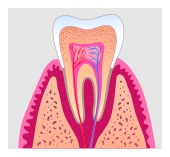 issue becomes contaminated and eventually infected. The exposure of pulp happens in many circumstances, such as when you have a large cavity or a fractured tooth. Your dentist can explain the exact reason for damage to this tissue. In these cases, the treatment is usually root canal treatment.
Root canal treatment is the process of going inside the pulp space and removing the infected, dead tissue. The space is then disinfected and sealed with special materials. Nowadays, root canal treatments are performed with advanced techniques and materials, making them far more comfortable and faster. After root canal treatment is complete, your restorative dentist will usually place a crown on your tooth to safeguard against fracture.
Set up an appointment with our office today! Call us at 925-828-4041 or make an appointment online!
Subscribe to:
Posts (Atom)